
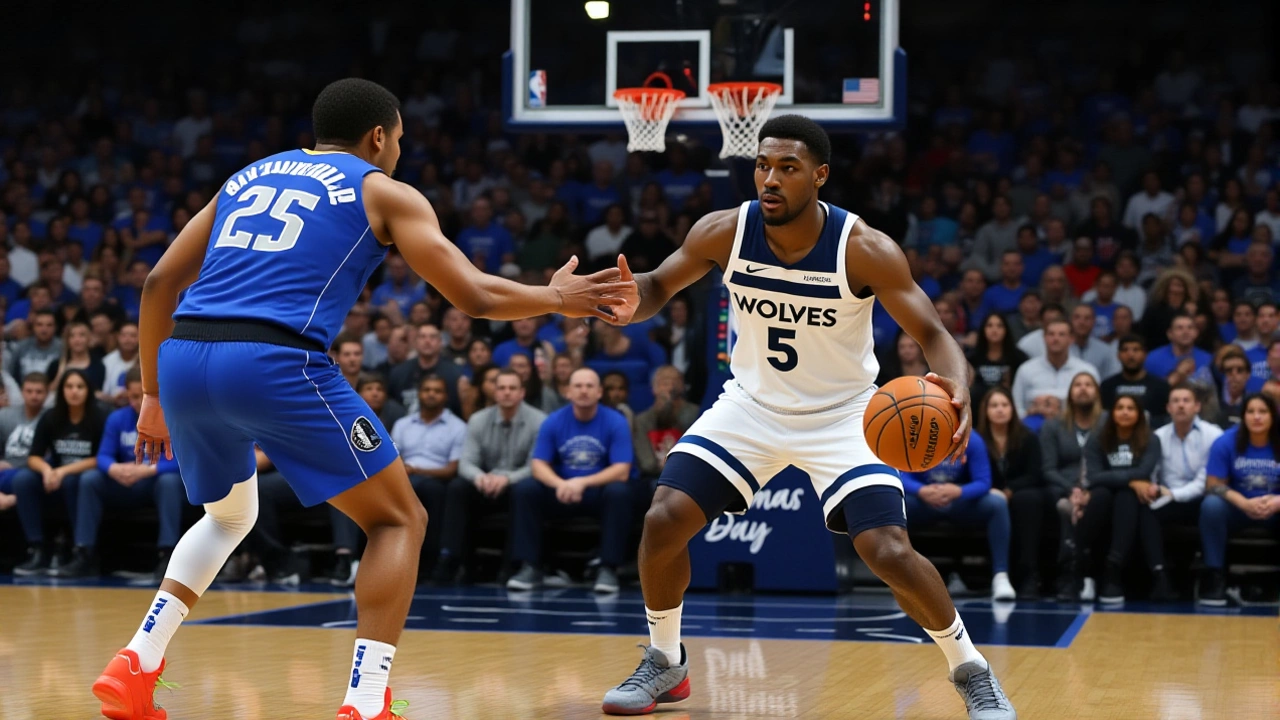
When the final buzzer sounded at Target Center on Monday night, the Minnesota Timberwolves weren’t just winning—they were sending a message. A 120-96 drubbing of the Dallas Mavericks wasn’t just another regular-season victory; it was a statement of identity. Naz Reid, the 25-year-old center wearing #11, turned in the performance of his career: 22 points, 12 rebounds, and three three-pointers on 9-of-14 shooting. And he wasn’t even the most dominant force on the floor. Rudy Gobert, the defensive anchor in #27, added 15 points, 9 boards, and 4 assists, turning the paint into a no-fly zone. Meanwhile, the Mavericks, missing key rotation players, looked lost—outscored by 15 in the first quarter alone, then outclassed in every phase after.
A Dominant Start That Set the Tone
The game didn’t start with a bang—it started with a landslide. Minnesota opened with a 34-21 first quarter, igniting the crowd with a 17-4 run that lasted just over four minutes. That sequence, ending at the 4.6-second mark of the first, turned what was supposed to be a competitive matchup into a potential blowout. Jaden Hardy, Dallas’s 20-year-old guard, hit four threes and scored 17 points, but he was often the only Mavs player moving with purpose. Brandon Williams, the starting point guard, managed 15 points and 5 rebounds, but his offensive reads were slow, his passes predictable. The Timberwolves’ defense? Relentless. They forced 14 turnovers in the first half, turning them into 21 points. The Mavericks? They looked like a team still figuring out who they are.
The Second Half Was a Clinic in Control
By halftime, Minnesota led 61-44. But the real dagger came in the third quarter. With 10:42 left in the period, the Timberwolves unleashed a 19-4 run that lasted nearly six minutes. Gobert blocked two shots. Reid hit a step-back three from the elbow. Anthony Edwards, who finished with 18 points on 7-of-15 shooting, didn’t need to be the hero—he just needed to be efficient. And he was. The Mavericks, down 66-46, had no answers. P.J. Washington, their 6’7” forward, fought hard with 13 points and 7 rebounds, but he was constantly doubled. The energy was gone. The bench didn’t spark anything. Even their coach, Jason Kidd, looked resigned, arms crossed, staring at the scoreboard like he’d seen this before.
Why This Loss Hurts Dallas More Than It Helps Minnesota
The Associated Press called the Mavericks “short-handed,” and that’s an understatement. Luka Dončić remains sidelined with a lingering ankle issue. Kyrie Irving is still working his way back from a hamstring strain. Without those two, Dallas is a shell of last year’s playoff contender. Their offense, once among the league’s most fluid, now looks disjointed. Hardy’s scoring bursts are thrilling but unsustainable. Williams is a capable starter but not a franchise cornerstone. And without Dončić’s playmaking, the offense stalls. The Mavericks are now 4-11, 6.5 games out of the Western Conference’s top eight. Their playoff hopes? Fading faster than a sunset over the Texas plains.
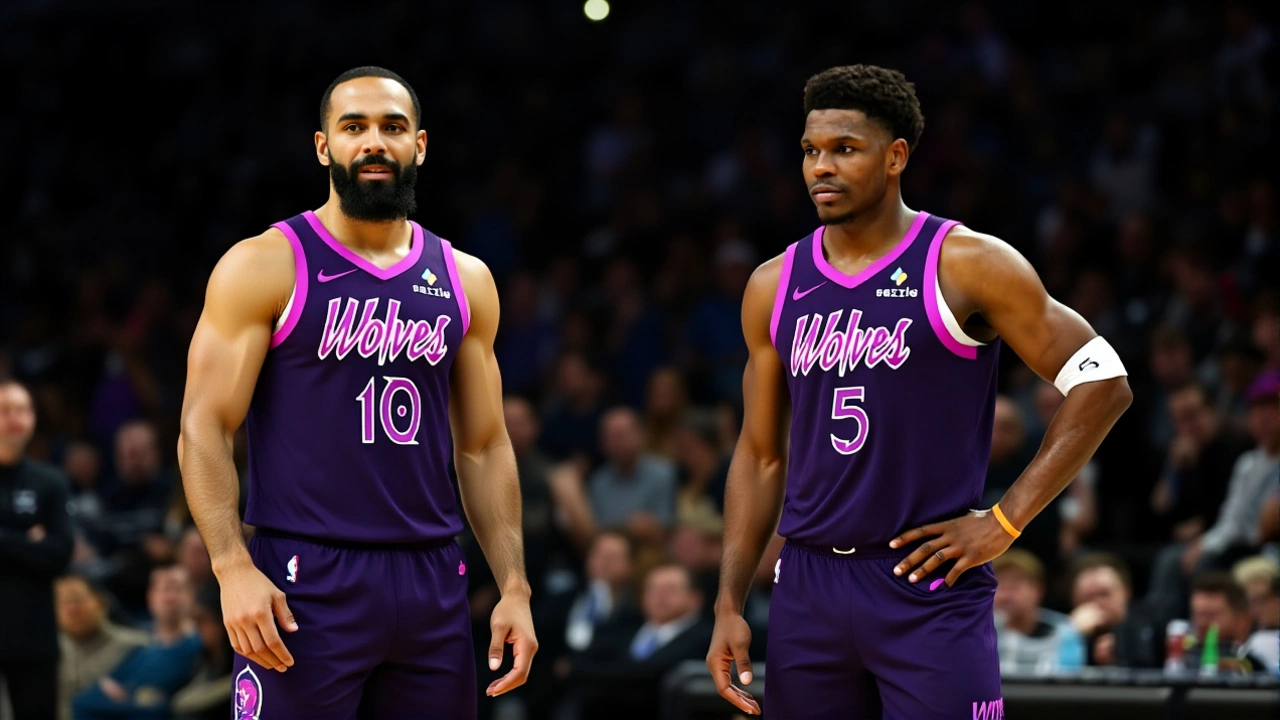
For Minnesota, it’s different. At 9-5, they’re quietly building momentum. They’re not the Thunder (14-1) or the Nuggets (10-3), but they’re in the conversation. Their defense ranks top-five in the league. Their bench, led by Reid and Jordan McLaughlin, outscored Dallas’s reserves 38-18. This win extended their streak to one, but more importantly, it confirmed they’re no longer just a team built around Edwards and Gobert—they’ve got depth. Reid’s emergence as a reliable second-option scorer could be the X-factor in a long playoff run.
What’s Next for Both Teams?
The Timberwolves host the Portland Trail Blazers on Wednesday, a team that’s lost two straight and ranks 11th in the West. Minnesota will be favored, but they can’t afford to look ahead. Their next three games are all at home—against the Grizzlies, Jazz, and Pelicans—before a brutal road trip to Phoenix and Denver. This stretch could make or break their top-four aspirations.
As for Dallas? They face the Memphis Grizzlies on Wednesday, a team that’s lost four straight but plays with grit. The Mavs need wins now, not tomorrow. If they lose again, they’ll be tied with the Grizzlies for the second-worst record in the West. Their front office is already under pressure. Fans are asking: Is this a rebuild? Or just a rough patch? The answers won’t come until Dončić returns—and even then, it may be too late to salvage their season.
Behind the Numbers
- Minnesota’s bench scored 38 points—the highest total of the season for their reserves.
- Naz Reid’s 22 points were his career-high in a non-overtime game.
- Minnesota held Dallas to 38% shooting from the field, including just 29% from three.
- Reid and Gobert combined for 37 points and 21 rebounds—a dominant frontcourt display.
- Only three Mavericks players scored in double figures—a sign of offensive stagnation.
Why This Game Matters Beyond the Box Score
It’s easy to write off a 24-point win as just another regular-season game. But in the NBA, where margins are razor-thin and confidence is everything, this was a turning point. For Minnesota, it proved they can dominate without Edwards going for 35. For Dallas, it was a mirror. They’re not just missing stars—they’re missing structure, rhythm, and leadership. The Western Conference is brutal. The Thunder, Nuggets, and Rockets are pulling away. The Mavericks? They’re slipping into the abyss.
Frequently Asked Questions
How did Naz Reid’s performance impact the Timberwolves’ season trajectory?
Reid’s 22-point, 12-rebound game was his best of the season and solidified his role as Minnesota’s most reliable second option. With Anthony Edwards drawing constant double teams, Reid’s ability to score inside and stretch the floor with three-pointers gives the Timberwolves a balanced offensive attack. His emergence reduces pressure on Edwards and makes Minnesota a tougher playoff matchup, especially against teams that rely on size.
Why is Dallas struggling so badly despite having Luka Dončić and Kyrie Irving?
Without Dončić and Irving, Dallas lacks playmaking and clutch scoring. The team’s offense is overly reliant on isolation plays, and their bench has no consistent scorers. Players like Jaden Hardy and Brandon Williams are talented but not yet equipped to carry a team. The Mavericks’ defense has also regressed, allowing opponents to shoot over 40% from three. Until their stars return—and the supporting cast improves—they’ll remain a bottom-half team.
How does this loss affect Dallas’s playoff chances this season?
At 4-11, Dallas is 6.5 games behind the 8th-seeded Spurs and 9.5 games behind the 7th-place Trail Blazers. With only 67 games left, they’d need to go 27-40 the rest of the way to sneak in—which is statistically improbable. Even if Dončić returns healthy, the team’s chemistry is fractured. They’re likely headed for a lottery pick unless they make a major trade before the deadline.
What makes the Timberwolves a legitimate contender in the West?
Minnesota has the league’s most formidable frontcourt in Gobert and Reid, a dynamic scorer in Edwards, and a deep bench that outperforms most teams. Their defense ranks in the top five, and they’re third in offensive rebounding. Unlike flashier teams, they win with structure, discipline, and consistency. If they stay healthy, they’re a top-four seed and a serious threat to any team in the playoffs.
Why did the game show up as November 18 on some platforms?
The game tipped off at 7:47 p.m. UTC on November 17, which was 1:47 p.m. Central Time in Minneapolis. But in international time zones—especially in Europe and Asia—the date was already November 18 when the game ended. Sites like Sofascore and Flashscore use UTC for global consistency, which explains the discrepancy. The game occurred on November 17 in the U.S., as confirmed by ESPN and local media.
What’s the significance of the Timberwolves’ 19-4 third-quarter run?
That run didn’t just extend the lead—it broke Dallas’s spirit. It came after the Mavericks had cut the deficit to 11 points, and Minnesota responded with a defensive lockdown and three straight baskets from Reid, Gobert, and Edwards. It showed the Timberwolves’ poise under pressure and their ability to execute in transition. Teams that can close quarters like that in the second half often become championship-caliber squads.