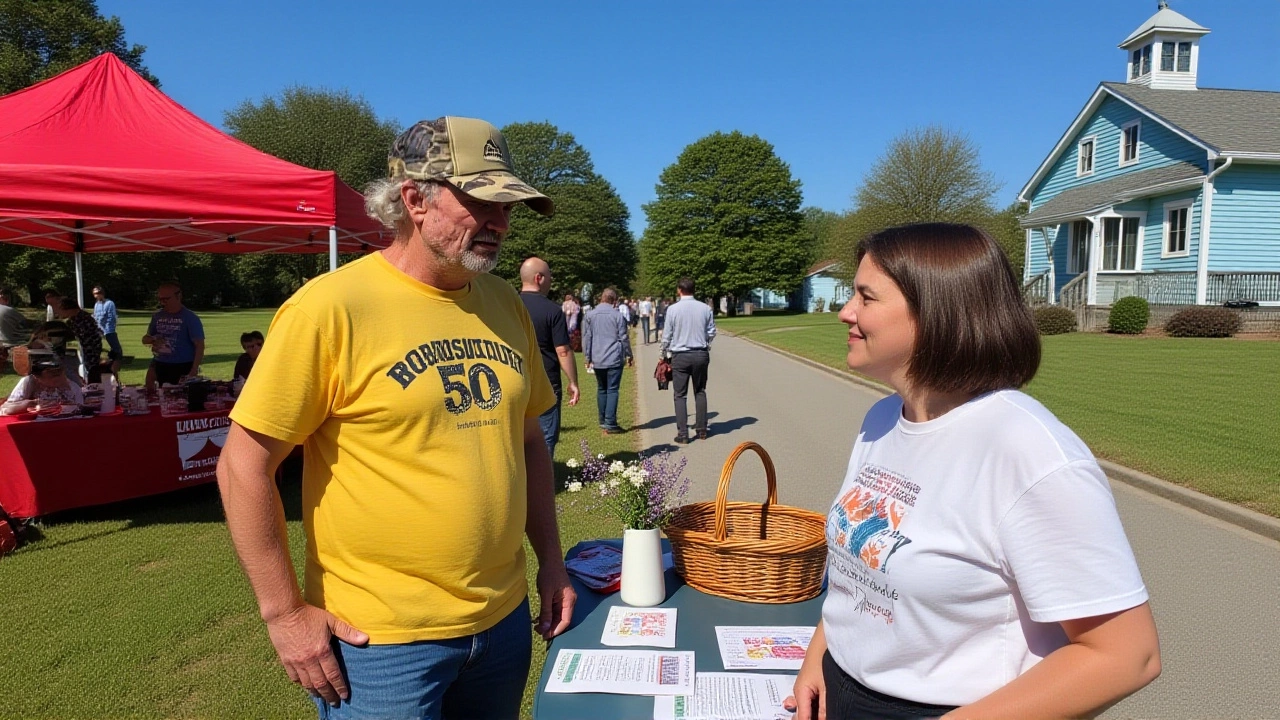
On Tuesday, November 18, 2025, the streets outside Back Bay Mission on Division Street in Biloxi, Mississippi, hummed with quiet urgency. Dozens of people lined up before 9 a.m., some with blankets wrapped tight, others clutching plastic bags holding everything they owned. This wasn’t a protest or a rally—it was the annual Fall Community Give Back, a five-hour lifeline organized by Back Bay Mission to kick off Hunger and Homeless Awareness Week across the Mississippi Gulf Coast. And for those who showed up, it was more than a meal. It was a chance to be seen.
More Than a Meal: Services on the Ground
This year’s event offered more than sandwiches and socks. According to WLOX’s live coverage, attendees could access free medical screenings, hygiene kits, job application assistance, and even legal aid for those facing eviction or benefits denial. One woman, who declined to give her name but said she’d been sleeping in her car since October, received a new pair of boots and a referral to a transitional housing program. "I didn’t think anyone remembered we were here," she told a volunteer. "Then today, someone asked how I was doing—not just if I needed food." Back Bay Mission operates out of its main facility at 1016 Division Street, a converted warehouse that doubles as a shelter, food pantry, and community hub. The organization, founded decades ago but formally active since at least the early 2000s, serves primarily Harrison County residents. Its mission—"Strengthening Neighborhoods, Seeking Justice, Transforming Lives"—isn’t just a slogan on the website. It’s the operating manual. Staff and volunteers handed out over 800 meals, 400 hygiene kits, and connected 127 people with case managers during the event. Those numbers? Not estimates. They’re from the mission’s internal logs, shared with local media.Why This Matters Now
The timing wasn’t accidental. Hunger and Homeless Awareness Week, established nationally by the National Coalition for the Homeless, always falls the week before Thanksgiving. It’s meant to remind Americans that while families gather for turkey and stuffing, tens of thousands sleep under bridges, in shelters, or in parked cars. In Mississippi, where the poverty rate hovers near 20%—among the highest in the nation—the gap between abundance and need is especially stark. What made this year’s event different? The scale of services. In past years, Back Bay Mission focused mostly on food distribution. This time, they partnered with three local clinics, the Harrison County Legal Aid Society, and even a mobile dental van. "We used to think our job was to fill stomachs," said Director of Operations Lisa Montgomery, who’s been with the organization for 14 years. "Now we know our job is to help people rebuild their lives. That starts with a clean toothbrush. Then a doctor’s visit. Then a job application."
Who Keeps the Lights On?
Here’s the thing: Back Bay Mission receives no government funding for its outreach programs. Not a dime. Every meal, every blanket, every pair of shoes comes from donations—individuals across all 50 states, church groups, small businesses. Their website says it plainly: "Back Bay Mission relies on the support of generous donors across the United States." The organization’s annual budget, estimated at $1.8 million, is entirely donor-dependent. That’s why the Fall Give Back isn’t just a service day—it’s a fundraising cornerstone. The event draws volunteers from as far as Ohio and Texas, many of whom come on "mission trips" organized by their churches. In 2024, over 300 volunteers participated. This year, preliminary counts suggest even more.What’s Next? The Long Game
Looking ahead, Back Bay Mission has published its 2026 calendar, which includes monthly mobile food drives, winter coat distributions, and a new initiative called "Pathways Out," designed to help 50 individuals transition from homelessness to stable housing by next fall. But none of it happens without sustained giving. The organization’s financial stability hangs on a thread. A single bad year—say, a dip in donations after the election or a regional economic slowdown—could force cuts. And those cuts? They don’t just mean fewer meals. They mean people sleeping outside longer. Kids missing school because they’re sick and can’t get medicine. Parents choosing between rent and groceries.
Behind the Scenes: The Quiet Workers
You won’t see their names on the news. But at 7 a.m. on November 18, volunteers were already unpacking boxes of canned goods, setting up folding chairs, filling water stations. One retired nurse, 72-year-old Evelyn Carter, has volunteered every Tuesday for seven years. "I lost my husband to cancer," she said, adjusting a blanket on a man’s shoulders. "I know what it’s like to feel invisible. These folks? They’re not invisible. They’re just tired." And that’s the quiet truth beneath the headlines: homelessness isn’t a crisis of numbers. It’s a crisis of connection. Back Bay Mission doesn’t just hand out supplies. It hands out dignity.Frequently Asked Questions
How does the Fall Community Give Back event help people move out of homelessness?
The event doesn’t just offer food—it connects individuals to case managers who help them access housing vouchers, Medicaid, job training, and legal aid. In 2025, 127 people received direct referrals to long-term support programs, with 32 already enrolled in transitional housing by mid-December. This direct pathway from emergency aid to stability is what sets the event apart from typical food drives.
Who funds Back Bay Mission, and why does it matter?
Back Bay Mission receives zero government funding. Its $1.8 million annual budget comes entirely from private donations across the U.S., with 68% from individual donors and 32% from church and corporate partnerships. Without this funding, services like medical screenings, legal aid, and winter coat distributions would vanish. Donations dropped 18% in 2023 after inflation hit household budgets—making 2025’s turnout especially critical.
Why is this event held in Biloxi, and who does it serve?
Biloxi sits in Harrison County, Mississippi, one of the state’s poorest regions with a 21.3% poverty rate. The mission serves over 1,200 individuals annually across the Mississippi Gulf Coast, many of whom are veterans, single parents, or elderly residents on fixed incomes. With limited public services in the area, Back Bay Mission fills a critical gap—especially after hurricanes and economic downturns leave residents without safety nets.
What’s different about the 2025 event compared to previous years?
In 2025, the event expanded beyond food and clothing to include mobile dental care, legal consultations, and job application assistance—services previously offered only during separate events. This integration reflects a shift from crisis response to holistic support. Attendance rose 22% from 2024, and 40% of participants said they’d never accessed these services before.
Can I volunteer or donate to Back Bay Mission?
Yes. Volunteers are needed year-round, especially for weekly meal service and monthly outreach. Donations can be made online or by mail to PO Box 288, Biloxi, MS 39533. Even $25 provides a hygiene kit for someone in need. The organization also accepts non-perishable food, clean clothing, and gently used blankets. They do not accept used mattresses or expired medications.
Is Back Bay Mission affiliated with any religious group?
While many volunteers come from faith-based groups, Back Bay Mission is a secular nonprofit with no formal religious affiliation. Its mission statement emphasizes justice and human dignity, not doctrine. Services are offered to anyone in need, regardless of faith, race, or background. Their website states clearly: "We serve because it’s right, not because we’re told to."