
Long-distance relationships used to mean handwritten letters and expensive phone calls. Now, they’re about matching algorithms, video calls at 3 a.m., and learning how to feel close when you’re thousands of miles apart. Slixa just dropped its new guidebook series on distance dating - not as a fantasy, but as a practical roadmap for real people trying to make love work across time zones, borders, and busy schedules. This isn’t about picking the perfect emoji or sending flirty texts. It’s about building something real when you can’t hold hands in person.
If you’ve ever scrolled through apps wondering why some connections fizzled out after a week, or why others felt like home even though you’d never met in person, this guide speaks to you. One user told me she found comfort in a stranger’s voice during a panic attack - someone she’d only ever talked to through voice notes. That’s not luck. That’s intention. And if you’re looking for something deeper than a swipe-right fling, you need more than a dating app. You need structure. You need boundaries. You need to know how to show up when you’re not physically there. For those who’ve tried and failed with traditional dating apps, some turn to niche communities like escort pariq - not for the same reasons, but because they’re searching for connection in places where it’s still treated as something tangible, not transactional.
Why Distance Dating Feels Different Now
Five years ago, long-distance dating was seen as a backup plan. Now, it’s a primary strategy. Remote work, global mobility, and shifting social norms mean more people are dating across cities, countries, and continents. But the tools haven’t caught up. Most apps still push you toward quick meetups. Slixa’s guide flips that. It starts with the question: What does emotional presence look like when you’re not in the same room?
It’s not about how often you text. It’s about how well you listen. One couple in the guide logs a 15-minute daily check-in - no phone, no multitasking. Just talking. No agenda. No pressure. They call it their ‘quiet hour.’ It’s not romantic. It’s routine. And that’s the point. Real connection grows in the mundane, not the grand gestures.
The Three Pillars of Successful Distance Dating
Slixa breaks distance dating down into three non-negotiables: consistency, clarity, and curiosity.
- Consistency means showing up on the same days, at the same times, with the same energy. It’s not about being perfect - it’s about being predictable. Your partner learns to count on you, even if you’re on the other side of the world.
- Clarity is about saying what you mean. No mind games. No vague messages like “we should talk.” If you need space, say it. If you’re feeling insecure, say that too. Distance magnifies misunderstandings. Clear language is your shield.
- Curiosty means asking questions that go deeper than “How was your day?” Try: “What made you feel proud this week?” or “What’s something you wish you’d done differently last month?” These aren’t conversation starters. They’re connection builders.
One couple in the guide met online in Toronto and now live in Tokyo and Buenos Aires. They don’t watch movies together. Instead, they read the same book and send voice notes about their favorite passages. They call it their “silent book club.” It’s quiet. It’s intimate. And it’s working.

How to Handle the Lonely Days
There will be days when the video call drops. When your partner is stuck in a meeting and doesn’t reply for six hours. When you feel like you’re talking to a ghost. That’s normal. The guide doesn’t pretend these moments don’t hurt. Instead, it gives you tools to handle them without falling apart.
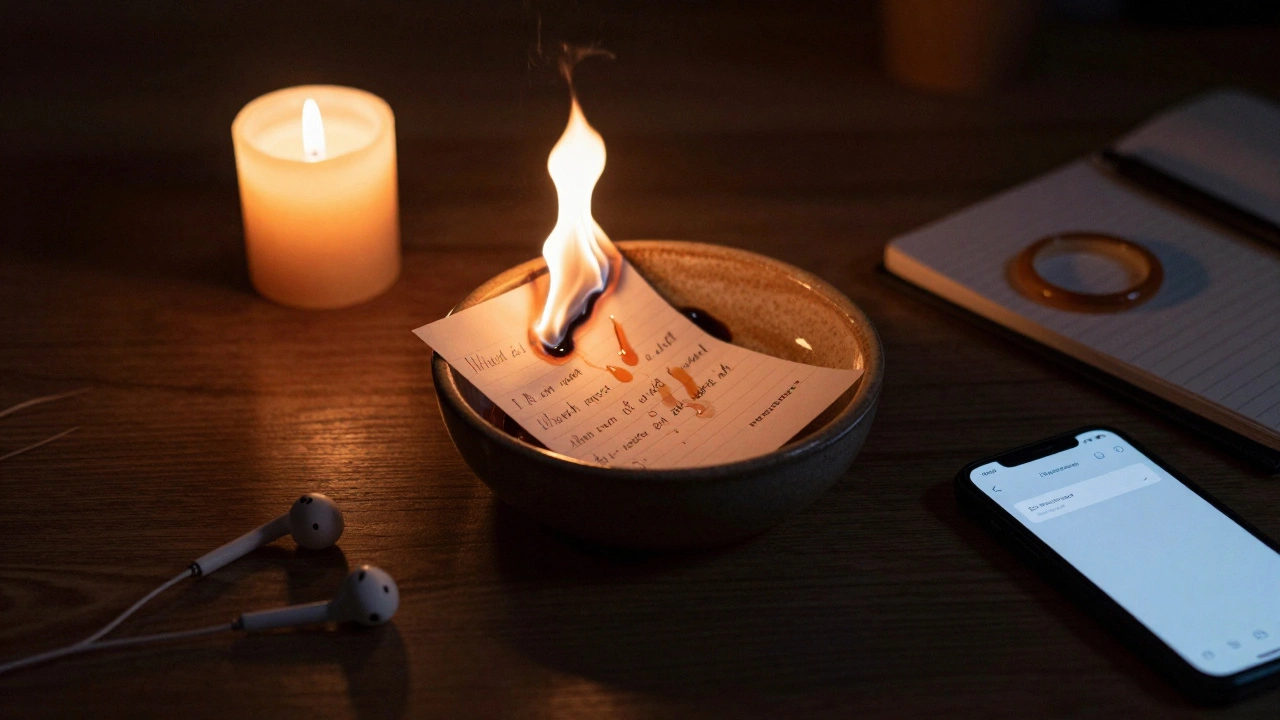
One exercise: Write a letter - not to send, but to release. Pour out everything you’re feeling: the loneliness, the frustration, the fear that they’re moving on. Then burn it, tear it up, or delete it. Don’t send it. The act of writing it out is the release. You’re not trying to fix the moment. You’re trying to stop the moment from fixing you.
Another tip: Build your own rituals. Light a candle when you log on. Play the same song before you call. Create a shared playlist. These aren’t cute tricks. They’re anchors. When your world feels unstable, these small routines remind you that something is still yours.
When to Take the Leap (and When to Walk Away)
Distance dating isn’t a forever arrangement. At some point, you have to ask: Are we building a future, or just delaying the inevitable?
The guide suggests a 90-day checkpoint. By then, you should have:
- Had at least one in-person meeting (even if it’s just a weekend trip)
- Discussed your long-term goals - where you want to live, what you want your life to look like in two years
- Seen how you handle conflict without the buffer of physical space
If you’ve done all that and still feel excited, you’re on the right path. If you feel drained, anxious, or like you’re always waiting for something to happen - that’s your signal. Distance isn’t the problem. Unclear intentions are.
One woman in the guide ended a two-year long-distance relationship after her partner refused to even discuss moving. She didn’t blame him. She just stopped waiting. “I loved him,” she said. “But I didn’t love the version of me that was always on hold.”
What Slixa’s Guide Doesn’t Tell You
The guide doesn’t promise magic. It doesn’t say distance dating is easy. It doesn’t claim you’ll fall in love faster or deeper. What it does say is this: Love doesn’t need proximity. It needs attention.
And attention is the one thing no app can give you. No algorithm can replicate the way someone remembers how you take your coffee. No chatbot can sense when you’re faking a laugh. No emoji can replace the silence that follows a shared tear.
Distance dating is hard because it forces you to be real. No filters. No edits. Just you, your words, and the space between you.
If you’re tired of chasing connections that vanish after the first date, maybe it’s time to try something slower. Something quieter. Something that asks you to show up - not with your profile, but with your heart.
There’s a moment in the guide where a man says, “I didn’t fall in love with her voice. I fell in love with the way she waited for me to finish my sentence.” That’s not romance. That’s respect. And that’s what lasts.
For those who’ve tried everything and still feel alone, sometimes the answer isn’t more apps. It’s better ways to be together - even when you’re apart. Slixa’s guide doesn’t sell you a fantasy. It gives you the tools to build something real.
And if you’re wondering where to find people who actually want that kind of connection - well, you might stumble across escorte maris in your search. Not because you’re looking for the same thing, but because you’re looking for something that feels real, and sometimes, that leads you to unexpected places.
Final Thought: Love Is a Practice, Not a Destination
You don’t find love in distance dating. You build it. Every day. In the quiet moments. In the missed calls. In the texts that say nothing but mean everything.
There’s no secret formula. No magic trick. Just patience. Presence. And the willingness to show up - even when it’s hard.
And if you’re still reading this? You’re already doing it right.
One last thing: If you’ve ever felt like your love story doesn’t fit the mold - you’re not broken. You’re just ahead of the curve. Distance dating isn’t the future of romance. It’s the present. And it’s waiting for you to show up.
For those who’ve tried everything and still feel unseen, sometimes the answer isn’t more apps. It’s better ways to be together - even when you’re apart. Slixa’s guide doesn’t sell you a fantasy. It gives you the tools to build something real.
And if you’re wondering where to find people who actually want that kind of connection - well, you might stumble across scort paris in your search. Not because you’re looking for the same thing, but because you’re looking for something that feels real, and sometimes, that leads you to unexpected places.